What a brown recluse looks like
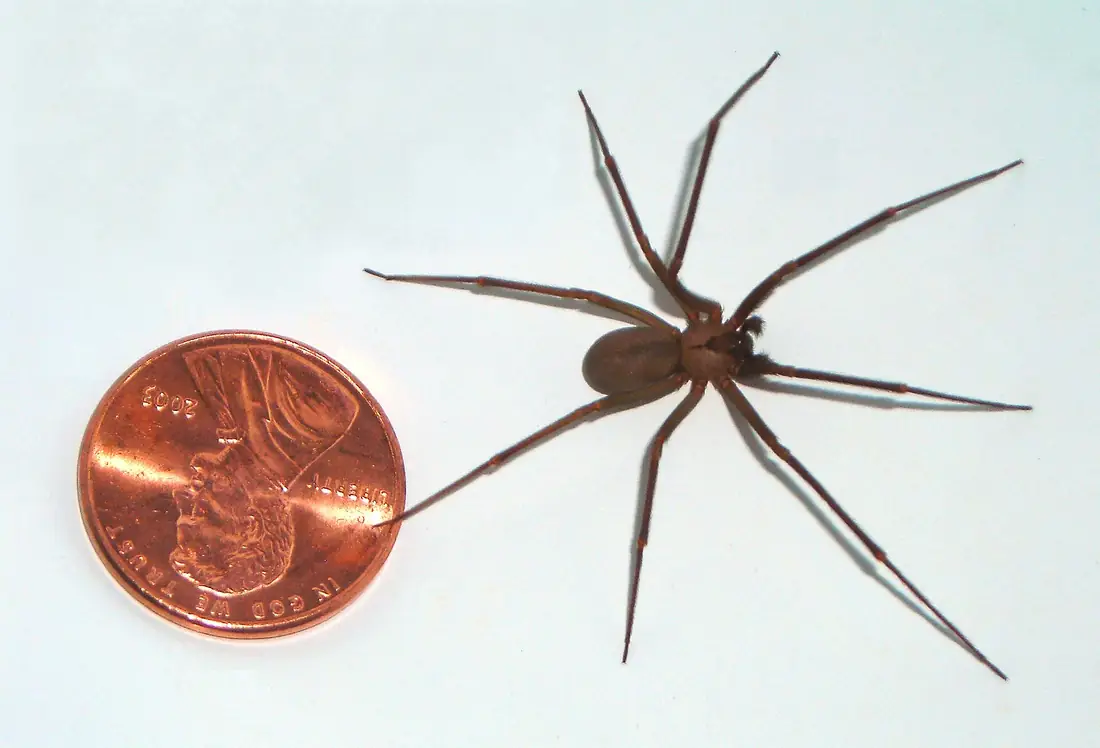
A tan to dark brown spider with a body about 1/4 to 1/2 inch long — roughly 9 mm — long thin legs, and a darker violin-shaped mark on the front body section, with the neck of the violin pointing back toward the abdomen.
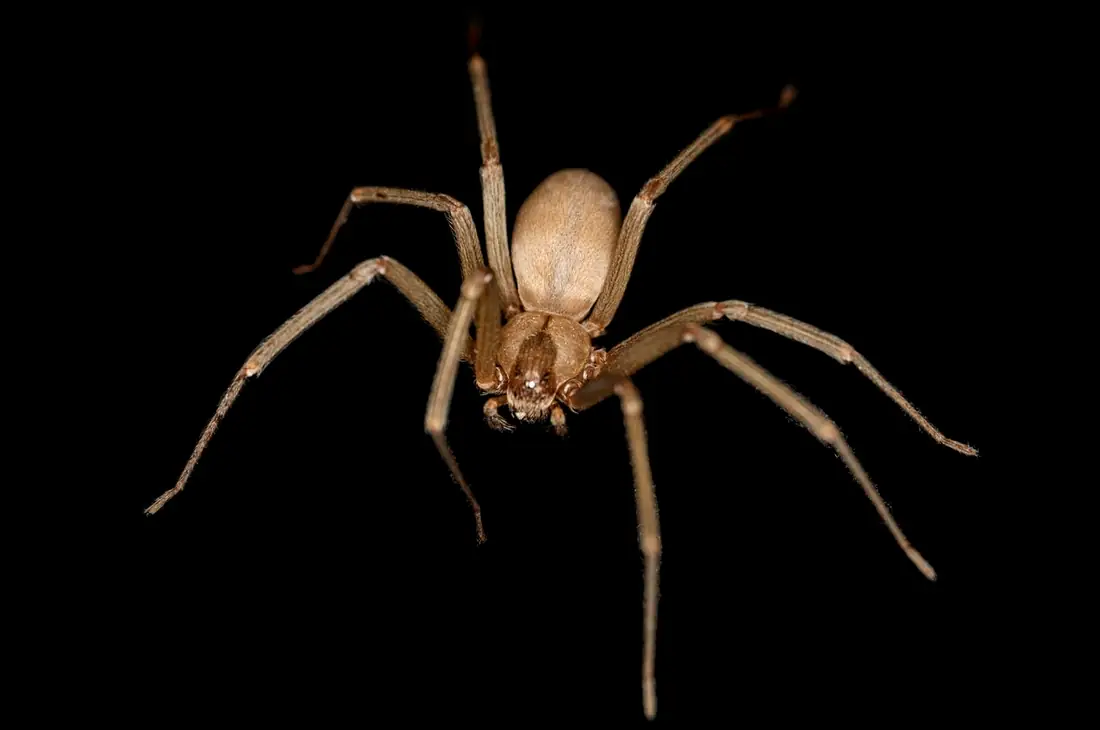
The violin is the famous mark, and also the least reliable one: it is not always distinct. On its own it proves little, which is why the next two sections matter more.
The six eyes: the most reliable sign
Most spiders have eight eyes. A recluse has six, arranged in three pairs in a semicircle at the front of the head.
They are small, so this needs a close photo or a magnifying glass — but a phone's zoom on a trapped or dead spider is usually enough. Six eyes in pairs, within the range below, is a recluse. Eight eyes is not, whatever the markings look like.
Where it actually lives
Range settles more cases than markings do. Brown recluses are established in sixteen states: Alabama, Arkansas, Georgia, Illinois, Indiana, Iowa, Kansas, Kentucky, Louisiana, Mississippi, Missouri, Nebraska, Ohio, Oklahoma, Tennessee and Texas.
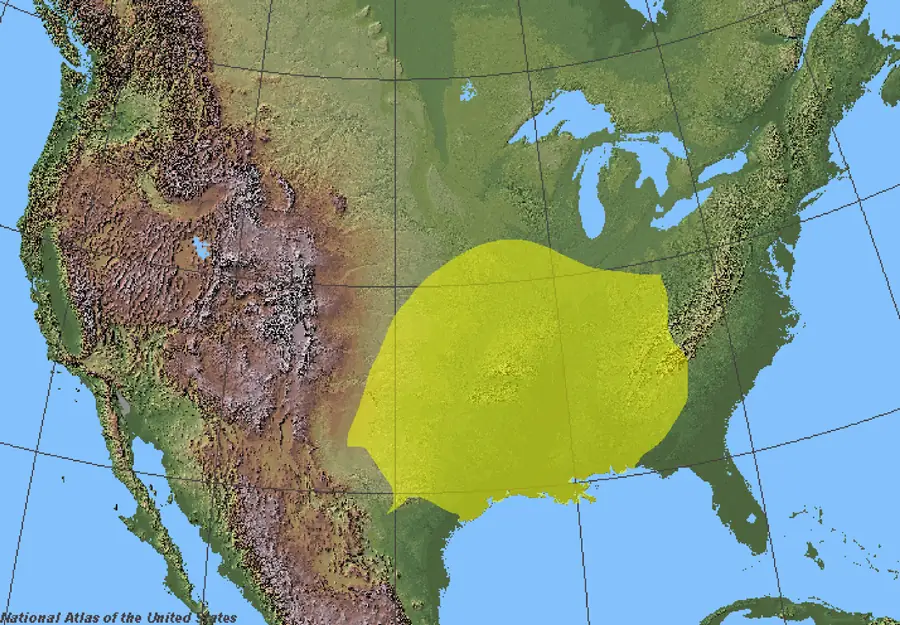
Isolated finds have been reported in Arizona, California, the District of Columbia, Florida, North Carolina, New Jersey, Pennsylvania, Washington and Wyoming — spiders carried in with furniture, firewood or vehicles. There are no breeding populations in California, and in Pennsylvania they are virtually nonexistent outside the odd building. A brown spider found well outside the sixteen states is very likely to be something else.
Where it hides indoors
Within its range, a brown recluse looks for warm, dry, undisturbed places: cracks in walls and boards, and behind and under anything in storage. Boxes, clutter and clothes that sit unused for weeks are exactly what it wants.
How bites happen
The brown recluse is not aggressive. Bites happen when a spider is trapped against the skin and feels threatened — someone puts on shoes left out overnight, or rolls onto a spider while asleep. Shaking out shoes and clothes that have been sitting unused prevents most of them.
What a bite does
Most brown recluse bites are minor. About 90% cause no reaction at all, or a small red bump around 5 mm across that heals on its own.
| Share of bites | What happens |
|---|---|
| About 90% | No reaction, or a small red bump that heals by itself |
| About 10% | A dead-tissue (necrotic) wound develops over roughly two weeks and can take two to four months to heal |
| Fewer than 1% | Symptoms throughout the body, which can be serious |
Most "brown recluse bites" are something else
Brown recluse bites are overdiagnosed. People, and sometimes their doctors, blame spiders for skin wounds with no evidence a spider was involved.
Many wounds labeled recluse bites turn out to be other things, including poison ivy, chemical burns and diabetic ulcers — and some of those need treatment of their own. Outside the sixteen-state range especially, a wound blamed on a recluse almost always has another cause. If you have the wound but never saw the spider, start with the bug bite identifier.
When to see a doctor
Get a suspected bite looked at if the wound is spreading, darkening or blistering, is still getting worse after a few days, or if you develop a fever, chills or feel generally unwell. If you caught the spider, bring it or a clear photo — it is the one thing that confirms what happened. The other spider worth knowing on sight is the black widow.